
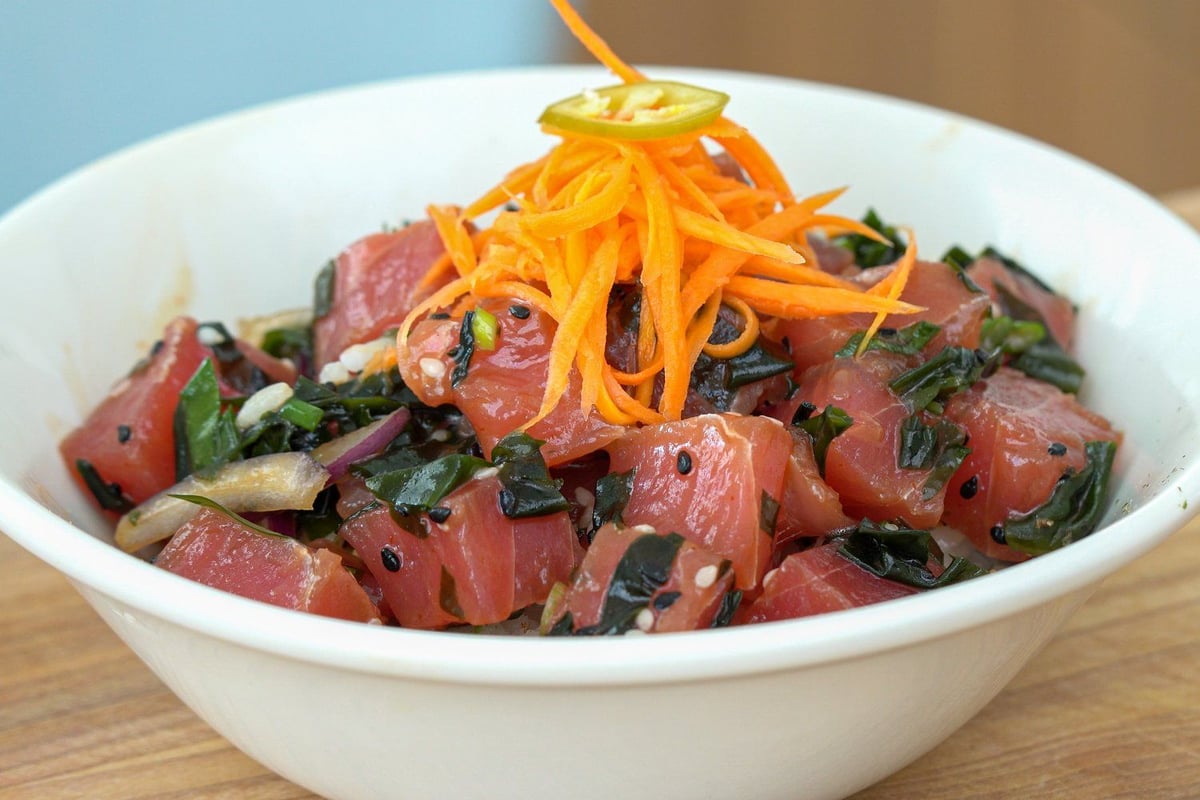
Tuna Poke Bowl
High-protein weeknight dinner or lunch.
 Ethan Chlebowski
Ingredients
Seasoned tuna
- Tuna, sushi grade300 g
- Scallions, sliced2
- Wakame seaweed, chopped2 spoonfuls
- Red Onions, sliced1/8
- Sesame Seedsa sprinkle
Seasoning sauce
- Soy Sauce15 ga spoonful
- Sesame Oil10 ga spoonful
- Rice Vinegar5 ga drizzle
- Sriracha5 ga drizzle
Spicy pickled carrots
- Water100 g1 part
- Rice Vinegar100 g1 part
- Carrots, julienned1
- Serrano peppers, thinly sliced1
- Salta sprinkle
- MSGa sprinkle
Method
Step 1: Pickle the carrots
Add the julienned carrots and sliced serrano peppers to a jar and pour over a mixture of water, rice wine vinegar, and salt. These will be ready for use once cooled and will get more pickled over time. The jar can be stored in the fridge for a long time.
Step 2: Cut the tuna & make the seasoning
Pat the tuna block dry before slicing into it. Cut down the block into strips, roughly 1/2 an inch wide. Then cut across the slices, making cubes. Toss into a bowl and set aside.
Add all seasoning sauce ingredients to a bowl and mix until homogenous. If using: add the wakame to a small bowl, and cover it with water to rehydrate it. Once hydrated, remove it from the bowl and chop it up.
Step 3: Marinate the tuna
Combine the sauce in a bowl with all seasoned tuna ingredients so that everything is coated. Let for a few minutes.
Step 4: Assemble & serve
Optional: add warmed leftover rice to a bowl.
Add a sprinkle of furikake seasoning to create a little crunchy layer before adding the marinated tuna mixture over the top. Lastly, top with the spicy pickled carrot mixture and wakame seaweed. Enjoy!
“This bowl is an easy way to consume a lot of delicious protein. It’s the perfect weeknight dinner or lunch.”
Ethan ChlebowskiWatch & Cook
Nutritional Information
Show macros split into…
Recommended: 2 servings
FAQ
Best practices for finding sushi grade tuna?
Unfortunately, there are no official regulations or reigning organizations (like the USDA) around sushi-grade fish in the US. Buying frozen and thawing yourself is often the best way to source a fresh product: look for large tuna or farm-raised salmon blocks. Keywords like: ‘sushi’, ‘sashimi grade’ or ‘great served raw’ or good signs (but not regulated). If you are having doubts, look up the seller online to see if you can find more information. If you need fresh fish to use immediately, ask the fish counter at your local supermarket (even better: a fish market) what they would recommend. Grocery stores often make sushi themselves, so you should be able to find what they are using.