
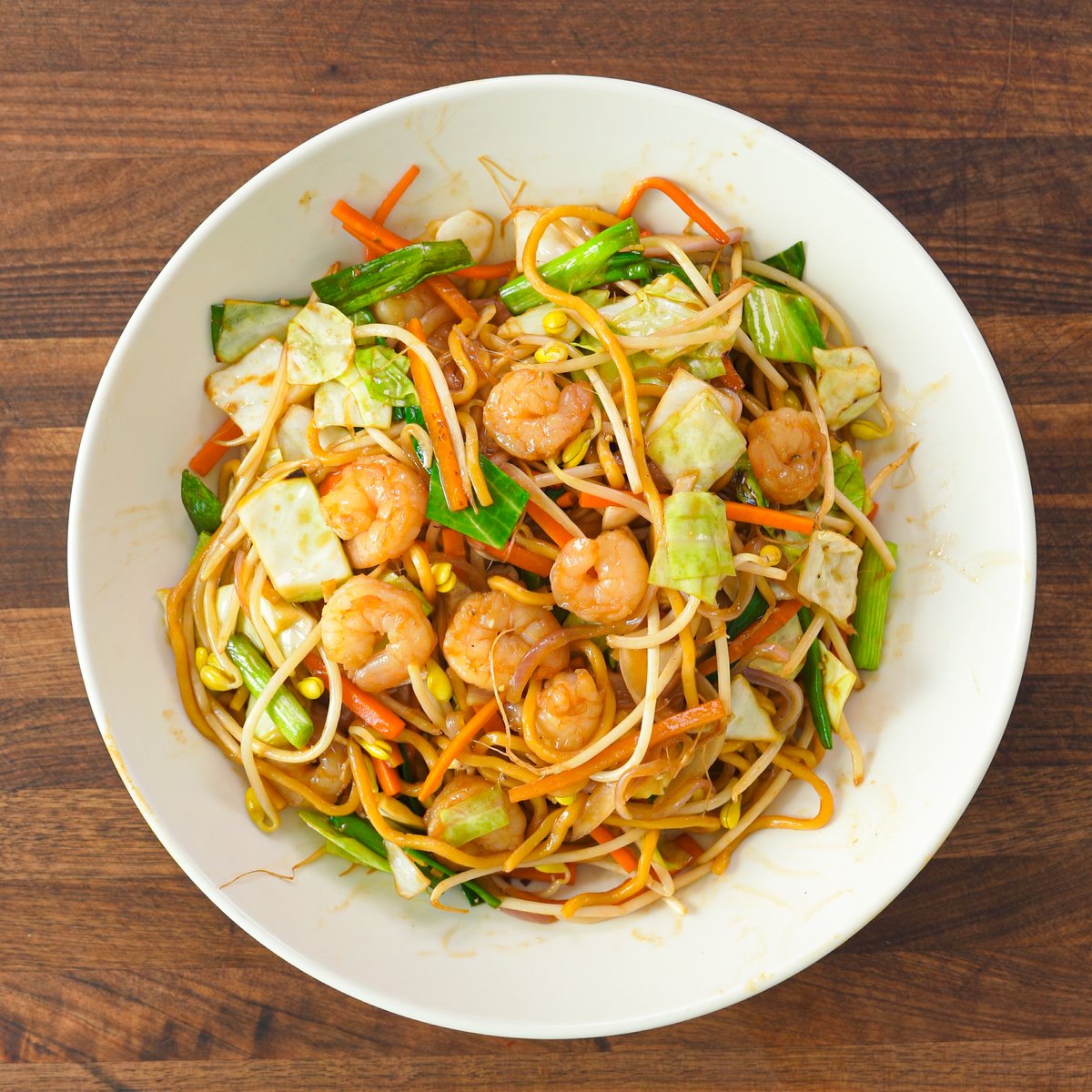
Classic Shrimp Lo Mein
Takeout style noodles with shrimp.
 Ethan Chlebowski
Ingredients
The noodles & oil
- Lo Mein Noodles, fresh or par-cooked~200 g~1/2 lb
- Neutral oilas neededfor stir frying
The protein
- Shrimp~200 g~1/2 lb
- Salta sprinkle2 g
- Sesame Oila drizzle5 g
The sauce
- Oyster Sauce50 g
- Light soy sauce20 g
- Dark Soy Sauce5 g
- Sugar10 g
- Chicken bouillon2 g
- Watera splash
- White pepperto taste
The vegetables
- Garlic, minced2-3 cloves
- Carrots, julienned1
- Cabbage, chopped1/8
- Red Onions, thinly sliced1/4
- Bean sproutsa handful
- Scallions, choppedfor garnish
Method
Step 1: Boil the noodles & season the shrimp
Bring a pot of water to a and cook noodles to the lower end of package instructions. You don’t want these to go mushy; they’ll continue cooking in the sauce.
Drain and set aside.
Meanwhile, toss the shrimp with salt and sesame oil until lightly coated.
Step 2: Mix the sauce
Mix together the oyster sauce, light and dark soy sauce, sugar, & chicken bouillon until well combined. Thin out with a splash of water, add a sprinkle of white pepper, then taste and adjust if needed. It should be strongly flavored but balanced.
Step 3: Cook the shrimp
Heat oil in a wok over high heat. or the shrimp briefly until just cooked through (colored on sides but not overly curled & tightened up).
Remove and set aside.
Step 4: Stir-fry the vegetables
Add a bit more oil if needed, then add carrot, onion, and cabbage to the wok.
until slightly softened, then the add garlic to until fragrant.
Step 5: Toss the noodles
Add noodles and sauce. Toss until glossy and evenly coated.
Return shrimp and mix to combine.
Add bean sprouts and green onion at the end to keep them crisp. Serve warm.
“I used shrimp because they cook super fast, but you could also make this recipe with thinly sliced chicken breast or another protein.”
Ethan ChlebowskiWatch & Cook
Nutritional Information
FAQ
How do I choose the right lo mein noodles at the store?
There are three main types you’ll see, and each one works a little differently:
Fresh noodles are the best option if you can find them. They’re usually slightly coated in starch, have a yellow tint from eggs, and cook quickly. These give you that signature springy, chewy texture that holds up really well in sauce.
Par-cooked noodles are the most convenient. They’re already partially cooked and lightly oiled, so you can go straight into the wok after a quick rinse or loosen. Great for weeknights.
Dried noodles are more accessible, but don’t quite have the same texture and require careful prep. Cook them just to al dente before draining and tossing into the dish. If you overcook them, they’ll go mushy once they hit the sauce.
Look for “lo mein” or “chow mein” noodles. At Asian or International supermarkets, you’ll find the fresh versions in the refrigerated section.
Why is my lo mein soggy?
Overcooked noodles + sitting in sauce too long. Undercook slightly and toss quickly.
Make sure to cook everything in batches, remove, then combine them back together at the end. Attempting to cook all components in the same pan will result in a mushy mass that instead of properly .