
Ingredients
Marinated beef
- Steak of choice, thinly sliced300 g2/3 lb
- Soy Saucea spoonful15 g
- Sugara spoonful10 g
- Sesame Oila drizzle
- Garlic, grated3 cloves
Bibimbap sauce
- Gochujang2 spoonfuls30 g
- Garlic, grated2 cloves
- Fresh ginger, grated1-inch knob
- Mirina spoonful15 g
- Rice Vinegara spoonful10 g
- Watera spoonful15 g
- Sesame Oila drizzle5 g
Pickled spicy sesame carrots
- Carrots, julienned2
- Salta sprinkle
- Soy Saucea spoonful15 g
- Rice Vinegara spoonful15 g
- Sesame Seeds, toasteda sprinkle
- Gochugarua sprinkle
Seasoned spinach
- Spinach1 bunch
- Saltto taste
- Sesame Oila drizzle
- Sesame Seedsa sprinkle
Zucchini
- Zucchini, sliced, quartered1
- Saltto taste
- Canola Oila spoonful15 g
- Sesame Oila drizzle
Mushrooms
- Shiitake Mushrooms453 g
- Saltto taste
- Cooking oila spoonful15 g
- Garlic1 clove
For serving
- Rice, cooked3-4 servings
- Eggs, fried3-4
- Scallions, slicedfor garnish
Method
Step 1: Marinate the beef
To start, thinly slice the beef across the grain. Place in a bowl and set over a scale. Add the soy sauce, sugar, sesame oil, and garlic. Mix then cover and let in the fridge until ready to cook.
Step 2: Mix the sauce
Place a bowl over a scale and add the ingredients for the bibimbap sauce: gochujang, sesame oil, sugar, rice vinegar, garlic, and ginger. Mix and set aside.
Step 3: Make the pickled spicy sesame carrots
First, julienne the carrots (slice them into thin match sticks). Then place them in a mortar and pestle with a little pinch of salt. Lightly bash and bruise the carrots and then transfer them to a glass jar.
Add the soy sauce, rice wine vinegar, toasted sesame seeds, and gochugaru. Mix to combine and pack down. Put a lid on and keep it in the fridge to lightly until ready for eating.
Step 4: Stir fry the vegetables
Cut the zucchini into quarter moons (slice them into coins, then into quarters). Add to a bowl with a pinch of salt and mix. Let sit for 5 minutes. Strain off any water, then pat dry.
Place a wok over medium-low heat. Add a drizzle of sesame oil to the pan. Add a bunch of spinach and a pinch of salt, slowly until wilted down. Remove and set aside.
Turn the heat to high and add vegetable oil. Toss in the zucchini and for 60 seconds. Add the sesame oil, mix together, remove and set aside.
Repeat this stir-frying process with the mushrooms & garlic. Set aside.
Step 5: Finish the beef & eggs, then serve.
Add the marinated beef and until cooked through and reaches 160 °F/ 71 °C. Set aside to rest while you make the eggs for serving.
Fry however many eggs you want (1 per bowl/serving is standard). This recipe makes around 4 rice bowls.
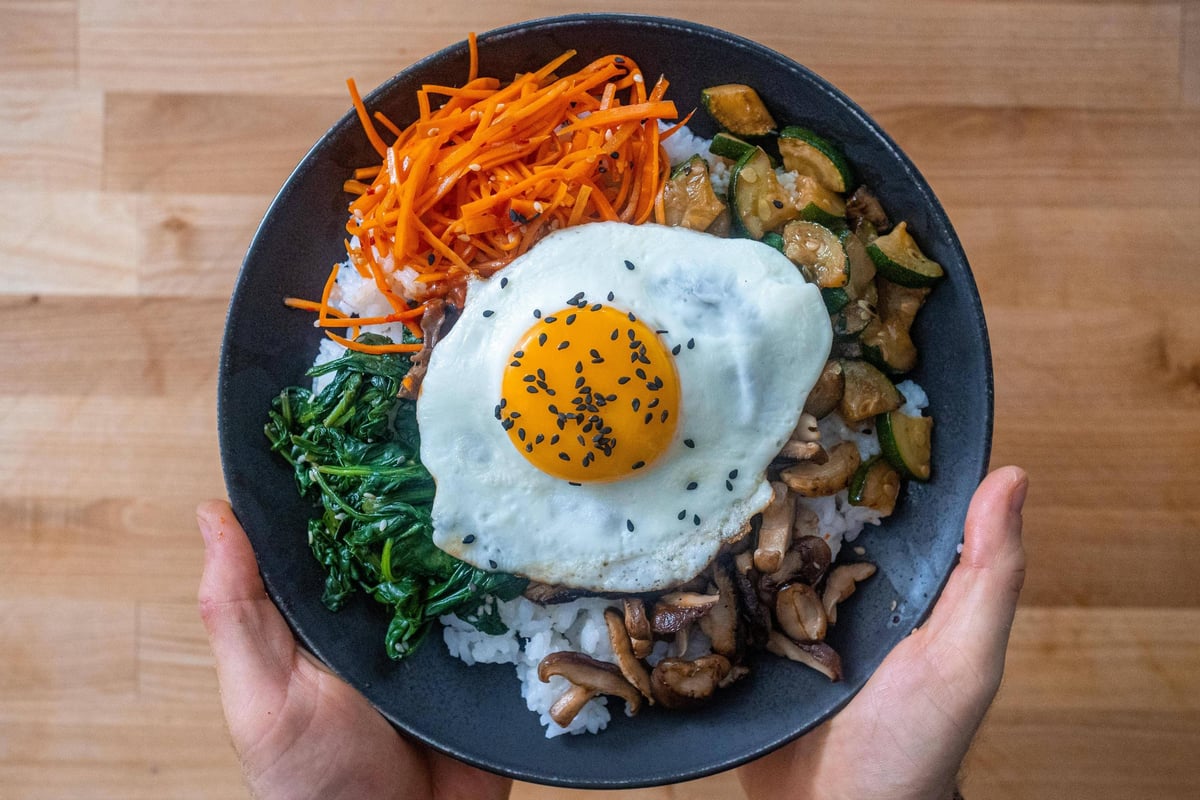
While the beef & eggs are still hot, serve: place cooked rice in the bottom of the bowl. Place the beef, various vegetables, and the bibimbap sauce over the rice. Top with the fried egg and some sliced scallions. Devour.
“The 5 base components typically found in these mixed rice bowls are: rice, marinated protein, vegetables, bibimbap sauce, and egg. These are my preferred toppings. However, in Korean, "bibim" means mixed and "bap" means cooked rice, so feel free to swap in your favorite vegetables and proteins instead.”
 Ethan Chlebowski
Watch & Cook
Nutritional Information
Show macros split into…
Recommended: 3 servings
FAQ
What if I don't have mirin?
Sugar and some extra vinegar will work if you can't find mirin or don't have it on hand. Mirin is essentially a rice wine with a high sugar content that brings and some acidity.
What if I don't have gochujang or gochugaru?
Gochujang is a Korean fermented red chile paste that brings the key flavors and to the sauce. In a pinch, you could use something like Sriracha, but it won't be the exact same. Gochugaru is a korean chili flake. Feel free to use any other spicy red pepper flake or powder instead, or omit if you want the sauce to be milder.