
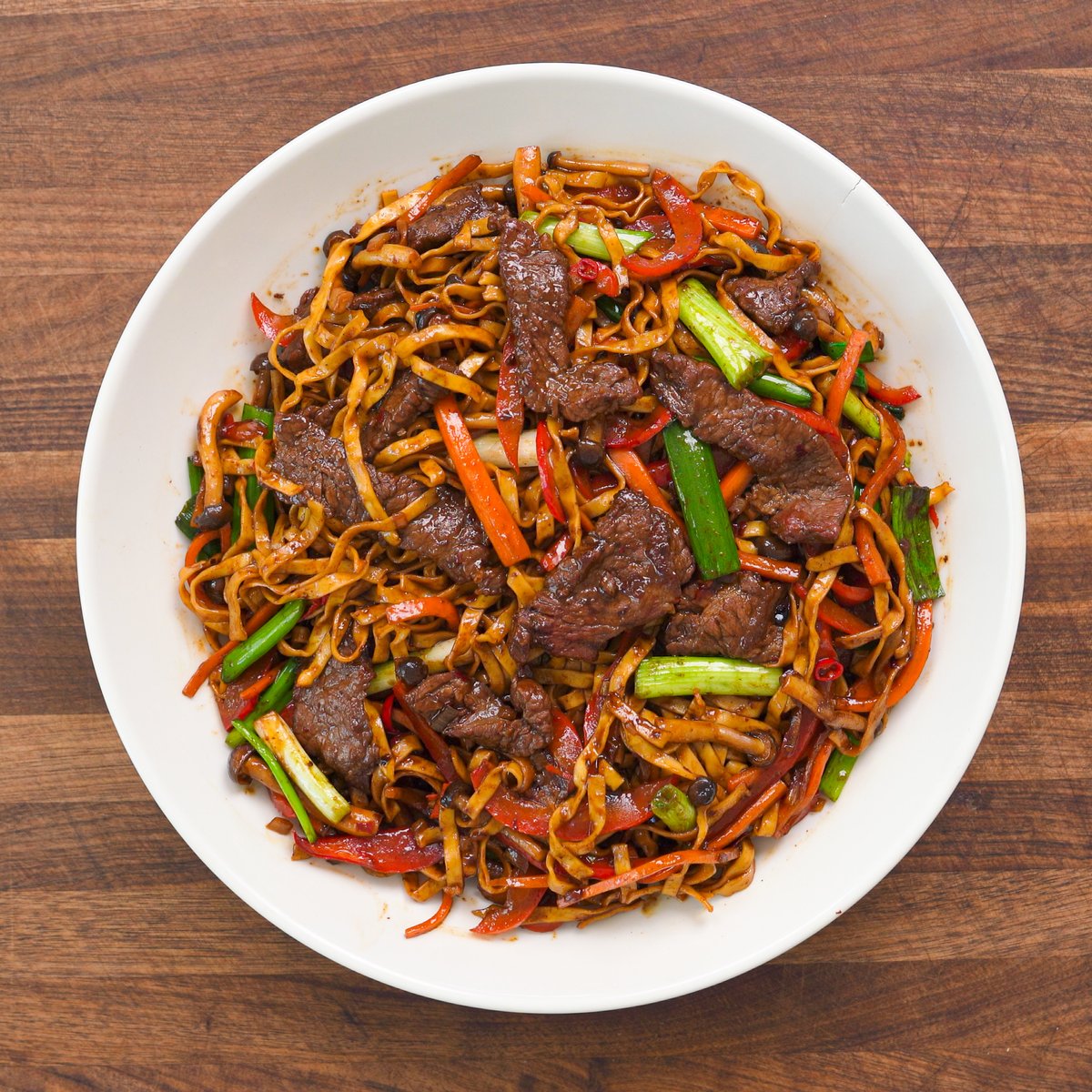
Spicy Beef Lo Mein
The takeout dish dialed up with chilies & a more savory, aromatic sauce.
 Ethan Chlebowski
Ingredients
Noodles + oil
- Lo Mein Noodles, fresh or parcooked200 g~1/2 lb
- Neutral oilas neededfor stir frying
Marinated beef
- Sirloin steaks, thinly sliced~200 g~1/2 lb
- Light soy saucea spoonful10 g
- Sugara sprinkle3 g
- Baking Sodaa pinch2 g
- Cornstarcha spoonful10 g
- Chili crisp oila spoonful10 g
Sauce
- Oyster Sauce50 g
- Light soy sauce10 g
- Dark Soy Sauce10 g
- Beef bouillon paste5 g
Aromatics + vegetables
- Shallots, diced1
- Thai chilies, slicedto taste
- Bell peppers, thinly sliced1/2
- Carrots, julienned1
- Mushrooms, sliced1 handful
- Scallions, choppedfor garnish
Method
Step 1: Boil the noodles & slice the beef
Bring a pot of water to a and cook the noodles to the lower end of the package instructions.
You want them slightly underdone—they’ll finish cooking in the sauce.
Drain and set aside.
Meanwhile, thinly slice the beef against the grain into bite-sized flat pieces.
Step 2: Marinate the beef
Add the sliced beef to a bowl with soy sauce, sugar, baking soda, chili crisp, and cornstarch.
Mix until evenly coated and slightly sticky. This style marinade helps tenderize the beef & create more during stir-frying.
Step 3: Mix the sauce
Combine oyster sauce, light soy sauce, dark soy sauce, and beef bouillon in a bowl.
Taste and adjust if needed (it should be deeply savory to flavor the whole dish and stand up to the beef).
Step 4: Sear the beef
Heat oil in a wok over high heat.
Add the beef in a single layer and until and just cooked through.
Work in batches if needed to avoid overcrowding.
Remove and set aside.
Step 5: Stir-fry the vegetables
Add a bit more oil if needed, then add the shallot & chilies to for about a minute or until fragrant.
Then, add the carrots, peppers, and mushrooms and until softened.
Step 6: Toss the noodles
Add noodles and sauce. Toss until glossy and evenly coated.
Return the beef and mix to combine. Add the scallions at the end so they just wilt into the dish.
Serve warm.
“This all-in spicy beef version of lo mein really hits all parts of your taste buds.”
Ethan ChlebowskiWatch & Cook
Nutritional Information
Show macros split into…
Recommended: 3 servings
FAQ
How do I choose the right lo mein noodles at the store?
There are three main types you’ll see, and each one works a little differently:
Fresh noodles are the best option if you can find them. They’re usually slightly coated in starch, have a yellow tint from eggs, and cook quickly. These give you that signature springy, chewy texture that holds up really well in sauce.
Par-cooked noodles are the most convenient. They’re already partially cooked and lightly oiled, so you can go straight into the wok after a quick rinse or loosen. Great for weeknights.
Dried noodles are more accessible, but don’t quite have the same texture and require careful prep. Cook them just to al dente before draining and tossing into the dish. If you overcook them, they’ll go mushy once they hit the sauce.
Look for “lo mein” or “chow mein” noodles. At Asian or International supermarkets, you’ll find the fresh versions in the refrigerated section.
Why is my lo mein soggy?
Overcooked noodles + sitting in sauce too long. Undercook slightly and toss quickly.
Make sure to cook everything in batches, remove, then combine back together at the end. Attempting to cook all components in the same pan will result in a mushy mass that instead of properly .
What cuts of beef work best for lo mein?
Almost any cut works—as long as you slice it thinly against the grain.
Good options include sirloin, flank, skirt, ribeye, or even tougher cuts like chuck or top round. The marinade (soy, starch, and baking soda) helps tenderize and keep the meat juicy, so you don’t need an expensive cut.