
Roti / Chapati Flatbread
A simple, easy-to-make sidekick.
 Ethan Chlebowski
Ingredients
Roti dough
- Whole wheat flour100 g
- Bread flour, or all-purpose75 g
- Water, hot or boiling130 g
- Salt, optional3 g
For baking & serving
- Bread flour, or all-purposefor dusting & rolling
- Ghee, or butterfor serving (optional)
Method
Step 1: Combine & knead
Add the flours, salt, and boiling water to the bowl along with the water. Mix the dough with a spoon until it becomes a cohesive mass.
Using your knuckles, the dough for 6-8 minutes then roll into a ball.
A tip here is to dip your hand in the water to prevent sticking and incorporate a bit more water into the dough.
To see if you are done kneading, perform the .
After kneading you have three options:
Portion and roll out right away.
Cover with plastic wrap and let at room temp for .5 to 3 hours. This will allow the dough to relax.
Cover and store in the fridge (up to a few days) until you are ready to cook.
Step 2: Portion & roll
When you are ready to cook the roti, sprinkle some flour over a work surface and portion the dough into 10 30-gram portions.
Using a rolling pin, roll each dough ball into an even circle about 6 to 7 inches (15 to 18 cm) in diameter.
Note: I roll in one direction, then rotate 45 degrees, and repeat that process until I have a reasonably circular roti.
Lightly dust each flattened roti and set aside.
Step 3: Cook
Place a cast iron over medium-high heat gas stove to preheat for a few minutes (450-475°F/232-246°C is the ideal surface temp).
Flap a rolled roti in between your hands to dust off excess flour, then gently place into the hot pan.
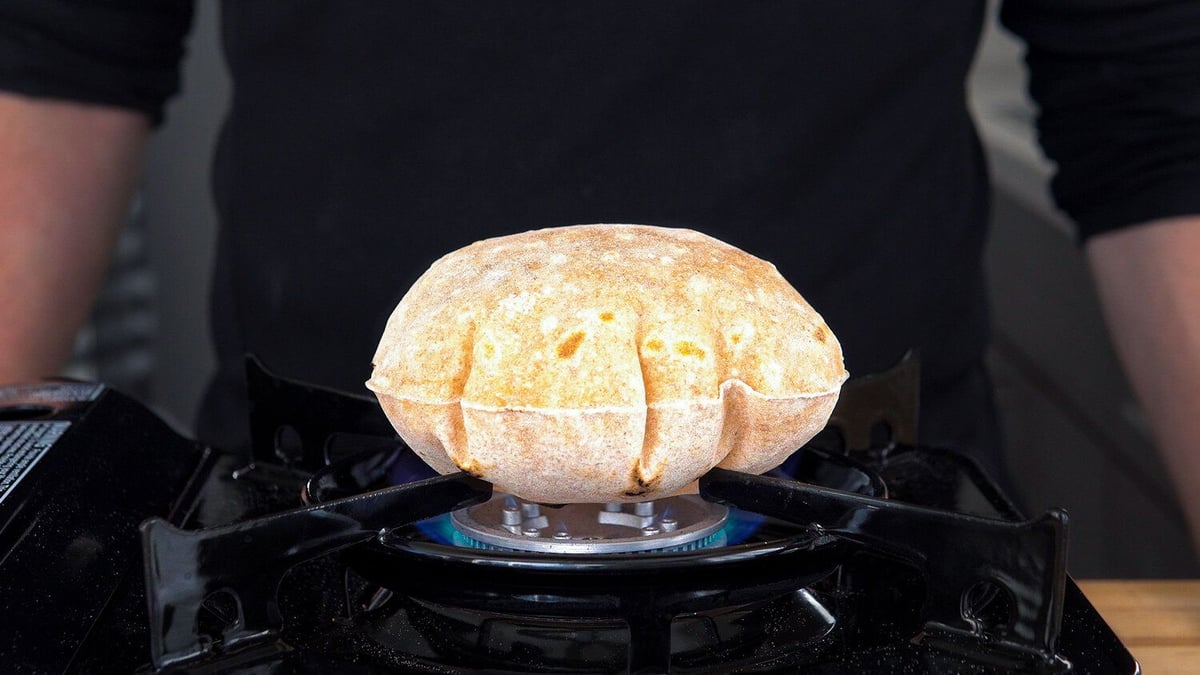
Cook on one side for 40 to 50 seconds until there is light bubbling and browning. Flip and cook for another 15 seconds then remove the pan from the heat and place the roti on the open flame where hopefully it puffs up like a cloud.
If you don't have an open flame to work with, then just continue cooking in the pan for an additional 30-45 seconds. You should still see some puffing in the roti.
Immediately remove from the heat. Set aside in a clean towel or foil to keep warm while you cook the remaining roti.
Step 4: Serve & store
Optionally spread ghee or clarified butter on the roti before serving, or eat it as a side dish.
To store, place the cooked roti in a plastic bag for up to 1-2 days on the counter. For longer storage, freeze them in the bag.
Reheat from frozen by microwaving for 20 seconds.
“In general, roti, chapati, and phulka all refer to flour & water-based unleavened flatbreads, with slight differences in preparations. For purposes of this recipe, I've just chosen to stick with the word roti as it's the most general.”
Ethan ChlebowskiWatch & Cook
Nutritional Information
FAQ
Why the mix of flours?
Traditionally, these are made with all 100% whole wheat Atta flour from India. It is finer than the typical whole wheat flour found in the US. Atta can be bought online and used for this recipe but the hydration % may need to be adjusted a bit (add more water as needed).
Do I have to use boiling water?
Warm or hot water works, but water gives the roti the best final .
Why? The boiling water g the starch in the flour, which leads to a more pliable and supple dough structure. And, hot water hydrates the flour much faster, which makes and rolling the roti a lot easier.
What if I don't have a gas stove?
You don't have to finish these on an open flame, although it will be harder to get them to fully puff up and char. If cooking entirely on a pan, just continue cooking and flipping for an extra 30-45 seconds. You can press on the edges of the roti to help it puff up in the pan some as well. The puff just ensures the interior of the roti and has completely cooked through. Even if you don't get a perfect puff, the heat from the pan should still cook the dough entirely through.