
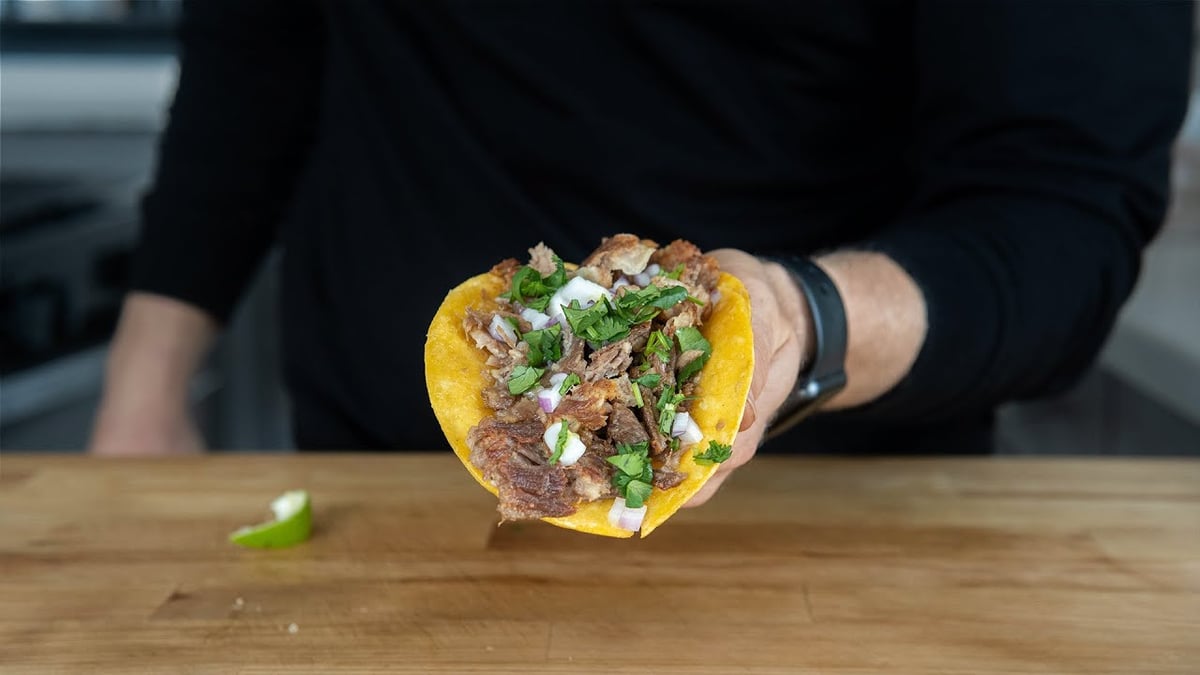
Make Ahead Carnitas
Tender and crispy braised pork.
 Ethan Chlebowski
Ingredients
Carnitas
- Pork shoulder, boneless1500 g2-3 lbs
- Salt15 g1% by weight
- Wateras needed
Method
Step 1: Prep the meat
Cut the meat into small cubes (measuring roughly 1 inch or 3 cm wide). Then, season the meat evenly with salt.
If you want to be exact: set a pot or bowl over a scale, add the pork chunks, and note their weight down. Add 1% salt based on the weight of the pork (e.g. 1500 g pork = 15 grams of salt).
Once the meat is salted properly, add it to a braising pot.
Step 2: Cover with water & bring to a simmer
Fill the pot with water to just barely cover the pork pieces. Set the pot on medium-high heat and bring the water to a , then lower the heat to medium-low so that the pot is just .
Step 3: Braise until tender
Let the pork continue uncovered while stirring occasionally. Continue the meat this way until the liquid has evaporated, which usually takes at least an hour.
Once the water has completely evaporated, check the texture of the pork:
If the meat is easily pulled apart with a fork, it’s done.
If the meat is still tough and hasn’t gone tender, it needs more braising time. Add a bit more water at a time and continue simmering until it reaches a tender texture.
Once the pork is done, there will be a layer of fat that has rendered out in the pot. Use this to crisp the pork carnitas in the next step:
Step 4: Shred & crisp the carnitas
You now have a decision to make, depending on when you’ll be enjoying the carnitas:
If serving immediately: Continue cooking the chunks of pork right in the pot with the rendered fat until they have lightly and gotten crisp on all sides.
Then, remove from the pot and chop or bash/shred into pieces and serve with tacos, salsa, etc.
If saving for later: Remove the pork from the pot. Reserve any rendered fat. Shred the warm pork chunks with your hands or forks.
Alternatively, add a handful of pork chunks at a time to a mortar and pestle and bash to create finer shreds of pork.
Store the carnitas in a container in the fridge. When ready to serve them, them with the reserved fat until browned and crispy. See the FAQ section of this recipe for serving ideas.
“Everyone should know how to make carnitas, specifically, this make-ahead version just makes sense for the home cook.”
Ethan ChlebowskiWatch & Cook
Nutritional Information
Show macros split into…
Recommended: 8 servings
FAQ
What can these carnitas be used for?
Try these on or in tacos, over rice and beans, burritos, enchiladas, sandwiches (tortas), pizza, or even in soup and pasta. Carnitas are best garnished with minced onion & cilantro and a squeeze of lime.
How do I know if the carnitas need more cooking time?
The carnitas are ready when they pull apart easily with a fork, meaning the tough collagen has broken down into gelatin, and the fat has been rendered. If the carnitas are still tough by the time the water has evaporated, add more water and let it continue to and until the meat becomes fully tender. Depending on the pork cut and the amount of meat you have, this could take from 1-4 hours.
Do I have to get a boneless pork shoulder? Do other cuts of pork work?
Traditionally, carnitas is made with many different cuts from the pig. Any tough braising cut with lots of fat and connective tissue works best: shoulder (also known as the Boston butt), blade roast, picnic shoulder, leg cuts, pork belly, or even neck/head cuts will work. Whatever cut you get, remove the bones when cubing up the pork for the braising process.